Best Budget-Friendly Materials for Home Renovation
Ideal for homeowners and DIY enthusiasts seeking affordable options to transform their bathrooms efficiently.
- First published:
- Last reviewed: Sep 26, 2026
- Written by: Laura Mitchell
- 21 minutes
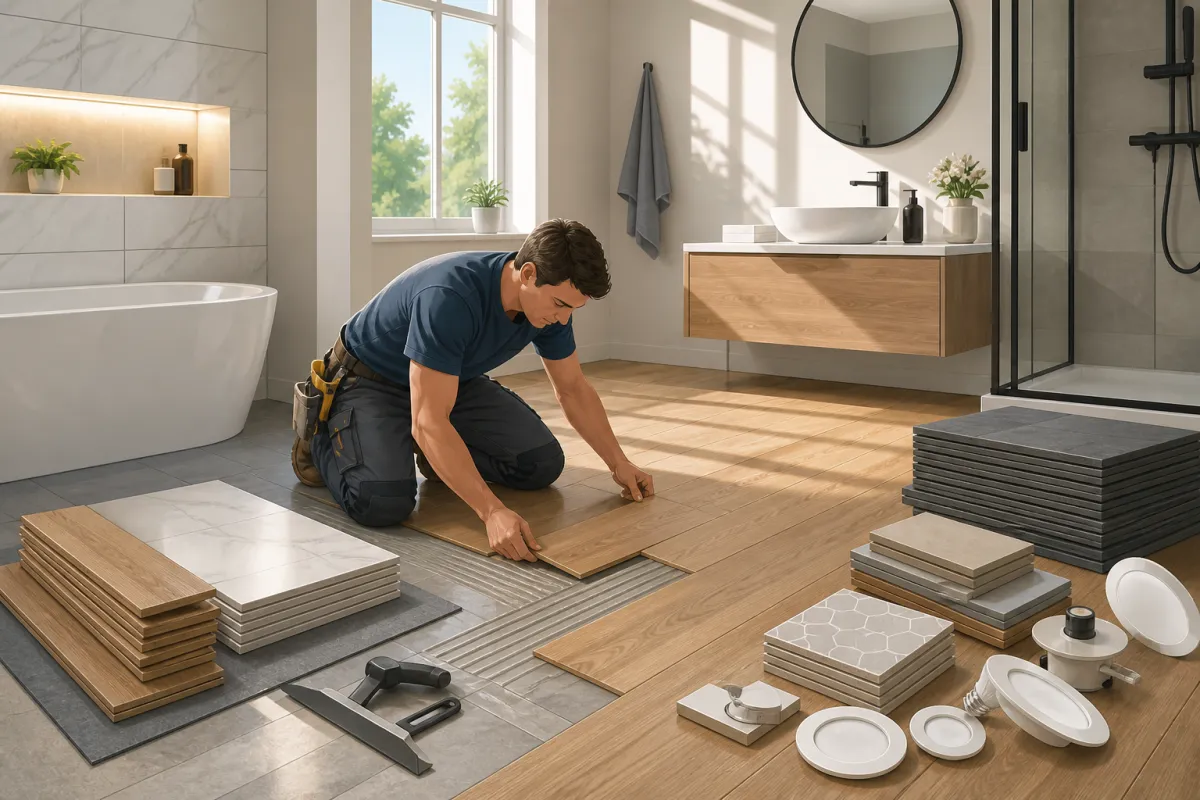
Top Budget-Friendly Materials for Bathroom Renovation
When renovating a bathroom on a budget, selecting the right materials can significantly impact both costs and durability. Here are some top choices that combine affordability with performance:
Laminate
Laminate surfaces are a versatile option for countertops and cabinetry. They are generally less expensive than natural stone or solid wood, typically costing around $20 to $50 per square foot. Laminate is easy to clean and resistant to moisture, making it suitable for bathroom environments. However, it is essential to avoid excessive water exposure, as it can warp over time.
Vinyl Flooring
Luxury vinyl flooring, including click-and-lock luxury vinyl tiles (LVT), is a popular choice for budget bathroom renovations. Priced between $2 and $5 per square foot, LVT can mimic the appearance of natural materials like wood or stone without the hefty price tag. Its waterproof nature and ease of installation—often achievable as a DIY project—make it an excellent choice for homeowners looking to save on labor costs[1].
Ceramic Tiles
Ceramic tiles provide a durable and stylish option for both flooring and wall treatments. They are resistant to moisture and can withstand the wear and tear of a bathroom environment. Average costs range from $1 to $15 per square foot, depending on the design and quality. Using porcelain tiles can offer a high-end look at a lower price, as they are dense, chip-resistant, and waterproof[2].
Peel-and-Stick Options
For those looking for a quick and easy renovation, peel-and-stick flooring can be an effective solution. These tiles are not only affordable, often ranging from $1 to $3 per square foot, but they also allow for straightforward installation without the need for professional help. This can be particularly beneficial for DIY enthusiasts aiming to refresh their bathroom space without breaking the bank.
In summary, laminate, vinyl, and ceramic tiles are excellent materials for budget bathroom renovations. They offer a balance of cost-effectiveness and durability, allowing homeowners to achieve a stylish look without overspending. Always consider the specific conditions of your bathroom to choose the best materials for your needs.
Affordable Fixtures and Fittings
When renovating a bathroom on a budget, selecting cost-effective fixtures and fittings is essential. Here are some affordable options for sinks, faucets, and toilets, along with their average price ranges and tips on where to find deals.
Sinks
Budget sinks can range from $50 to $200, depending on the style and material. Popular options include:
- Vessel sinks: These sit on top of the counter and can be found for as low as $100.
- Undermount sinks: These are installed beneath the countertop, generally costing around $150.
- Drop-in sinks: A more affordable choice, typically priced between $50 and $150.
To find deals, check local home improvement stores, clearance sections, and online marketplaces like Craigslist or Facebook Marketplace.
Faucets
Faucets can vary significantly in price, but budget-friendly options are available for $30 to $150. When shopping for faucets, consider:
- Single-handle faucets: Often cheaper and easier to install, prices start around $30.
- Two-handle faucets: These can range from $50 to $100, depending on the brand and finish.
Look for sales at big-box stores or consider purchasing from discount retailers to save on costs.
Toilets
Toilets are a significant part of bathroom renovations and can be found at prices ranging from $100 to $300. Consider these options:
- Standard toilets: Basic models can be purchased for as little as $100.
- Low-flow toilets: These are more energy-efficient and can save on water bills, costing between $150 and $300.
Shopping during clearance events or looking for sales at home improvement stores can lead to substantial savings.
Conclusion
In summary, budget sinks, faucets, and toilets can be sourced effectively for a bathroom renovation. By focusing on affordable options and keeping an eye out for deals, homeowners can achieve a stylish and functional bathroom without overspending. Always compare prices and consider purchasing from multiple sources to maximize savings.
Cost-Effective Flooring Solutions
Selecting the right flooring for a budget bathroom renovation can significantly influence both aesthetics and cost. Here are several cost-effective flooring options to consider:
Luxury Vinyl Planks (LVP)
Luxury vinyl planks are a durable and stylish option that can mimic the look of hardwood or stone at a fraction of the cost. Priced between $2 and $5 per square foot, LVP is waterproof, making it ideal for bathrooms. Its click-and-lock installation method allows for easy DIY projects, which can help save on labor costs[1].
Pros:
- Waterproof and resistant to moisture.
- Easy to install without professional help.
- Variety of designs available.
Cons:
- May not have the same longevity as higher-end materials.
Porcelain Tiles
Porcelain tiles provide a high-end appearance while being cost-effective. They typically range from $3 to $10 per square foot, offering durability and resistance to water and chips[2]. For a budget-friendly bathroom remodel, using porcelain tiles can elevate the overall look without overspending.
Pros:
- Dense and waterproof, suitable for wet areas.
- Resistant to chipping and scratching.
- Available in various styles and finishes.
Cons:
- Can be more challenging to install compared to vinyl options, potentially requiring professional help.
Peel-and-Stick Flooring
Peel-and-stick flooring presents a straightforward and economical solution for those looking to update their bathroom quickly. These tiles usually cost between $1 and $3 per square foot and are designed for easy installation, making them perfect for DIY enthusiasts.
Pros:
- Affordable and easy to install.
- Wide range of designs available.
- Quick renovation solution.
Cons:
- May not be as durable as other flooring options.
- Can be less water-resistant over time.
Cost Comparisons
When considering flooring options, it’s essential to factor in both material costs and installation expenses. For a small bathroom, the total flooring cost can vary significantly:
- Luxury Vinyl Planks: $2-$5 per square foot.
- Porcelain Tiles: $3-$10 per square foot.
- Peel-and-Stick Flooring: $1-$3 per square foot.
Choosing the right flooring depends on your budget, installation skills, and desired aesthetics. By evaluating these options, homeowners can select the most suitable flooring solution for their bathroom renovation while staying within budget.
Smart Storage Solutions on a Budget
Maximizing storage in a bathroom can be a challenge, particularly in smaller spaces. Fortunately, there are several affordable cabinetry and shelving options that can help homeowners optimize their bathrooms without breaking the bank.
Affordable Cabinetry Options
Modular cabinetry is a smart choice for budget-conscious renovations. These collections can be customized to fit various spaces and needs, providing flexibility for different bathroom layouts. Prices for modular cabinets typically range from $100 to $300 per unit, depending on size and material.
DIY Cabinetry Ideas:
- Repurpose Old Furniture: Transform an old dresser into a unique vanity by adding a sink and plumbing. This not only saves money but also adds character to the space.
- Open Shelving: Install shelves above the toilet or sink for easy access to toiletries and decor. Floating shelves can be found for as little as $20 each and are simple to install.
Shelving Solutions
Wall-mounted shelves are an excellent way to utilize vertical space. They can hold baskets, towels, and decorative items, keeping countertops clutter-free.
Cost-Saving Tips:
- Use Baskets: Incorporate baskets on shelves to organize smaller items. This can help maintain a tidy appearance while being budget-friendly.
- DIY Floating Shelves: Create your own floating shelves using reclaimed wood or inexpensive lumber. This can cost around $10 to $30 per shelf, depending on materials.
Additional Storage Ideas
Consider using storage carts or bins for easy mobility and organization. These can be placed in corners or under sinks to maximize every inch of space.
Cost Considerations:
- Storage Carts: These can be found for $30 to $100 and provide a versatile solution for storing bathroom essentials.
- Under-Sink Storage: Use stackable bins or drawers specifically designed for under-sink areas to make the most of this often-overlooked space.
By implementing these smart storage solutions, homeowners can achieve a functional and organized bathroom on a budget. Focusing on modular options, DIY projects, and creative shelving can significantly enhance storage capabilities without requiring a large investment.
Paint and Wall Treatments That Won't Break the Bank
Renovating your bathroom with paint and wall treatments can dramatically transform the space without significant expense. Here are budget-friendly options and DIY tips to consider.
Affordable Paint Options
Acrylic Latex Paint: This is a popular choice for bathrooms due to its moisture resistance. Prices typically range from $15 to $30 per gallon. A gallon can cover approximately 350 square feet, making it cost-effective for larger areas.
Chalk Paint: Known for its matte finish and ease of application, chalk paint can be used on furniture and cabinetry. It costs around $20 to $40 per quart and requires minimal prep work, making it ideal for DIY projects.
Low-VOC Paint: For those concerned about air quality, low-VOC (volatile organic compounds) paints are available at similar price points. They help maintain a healthier environment while providing good coverage and durability.
Wallpaper Alternatives
Peel-and-Stick Wallpaper: This is an excellent option for adding visual interest without the commitment of traditional wallpaper. Prices range from $20 to $50 per roll, and it can often be removed easily, making it perfect for renters or those who like to change their decor frequently.
Stencils: Instead of wallpaper, consider using stencils to create patterns on your walls. A stencil kit can cost between $10 and $30, and with a little paint, you can achieve a custom look that reflects your style.
DIY Wall Treatments: Textured wall treatments, such as wood paneling or beadboard, can be a cost-effective way to add character. Basic beadboard panels are available for about $15 to $25 per panel and can be painted to match your decor.
DIY Application Tips
- Preparation: Before painting, ensure walls are clean, dry, and patched. This step helps the paint adhere better and provides a smoother finish.
- Use Quality Brushes and Rollers: Investing in quality tools can make a significant difference in the final appearance. Good brushes and rollers help minimize streaks and ensure even coverage.
- Consider Time: For larger projects, allocate enough time to allow for drying and multiple coats as needed. Often, two coats are necessary for even coverage, especially with lighter colors over darker ones.
By opting for budget-friendly paint and wall treatments, homeowners can achieve a fresh, updated look for their bathrooms without overspending. Always explore DIY options for application to further reduce costs while adding a personal touch to the space.
Energy-Efficient Upgrades for Long-Term Savings
Incorporating energy-efficient upgrades into a budget bathroom renovation can lead to significant long-term savings on utility bills. Here are some cost-effective options to consider:
LED Lighting
Switching to LED lighting is one of the simplest and most effective ways to enhance energy efficiency. LED bulbs use up to 75% less energy than traditional incandescent bulbs and last up to 25 times longer[3]. For example, if you replace a standard 60-watt bulb with an LED equivalent (around 10 watts), you can save approximately $80 in energy costs over the bulb's lifetime.
Installation Tips:
- Look for LED fixtures designed for damp environments, such as those rated for bathroom use.
- Consider installing dimmer switches to further reduce energy consumption and enhance ambiance.
Low-Flow Fixtures
Low-flow faucets and showerheads are another great way to save water and reduce utility costs. Low-flow faucets typically use 1.5 gallons of water per minute compared to 2.2 gallons for standard models, which can translate to a savings of over 1,000 gallons of water annually for a family of four[4]. Showerheads with a flow rate of 2.5 gallons per minute can be replaced with low-flow options that use only 1.8 gallons per minute.
Examples of Low-Flow Options:
- Low-Flow Showerheads: Prices range from $20 to $50, offering a good balance between flow rate and comfort.
- Low-Flow Faucets: Available starting at around $15, these fixtures can substantially reduce water bills over time.
Energy-Efficient Toilets
Investing in a low-flow toilet can further enhance water savings. Standard toilets use approximately 1.6 gallons per flush, while newer low-flow models can use as little as 1.28 gallons, saving about 20% more water[5]. This reduction can lead to an annual savings of about $110 on water bills for a family of four.
Cost Considerations:
- Low-flow toilets can be found for as little as $150, providing a balance of efficiency and affordability.
- Look for models with the WaterSense label, which indicates they meet water efficiency and performance criteria.
Conclusion
Upgrading to energy-efficient lighting, low-flow fixtures, and toilets can significantly enhance a budget bathroom renovation while providing ongoing savings on utility bills. By focusing on these upgrades, homeowners can create a more sustainable space without compromising on style or functionality. Always compare products and consider DIY installation to maximize savings on these essential upgrades. For more planning tips, check out our guide on Home Renovation on a Budget: Planning and Tools.
DIY vs. Hiring Professionals: When to Save and When to Spend
Deciding whether to undertake a bathroom renovation project yourself or hire professionals can significantly impact your budget. Understanding which tasks are suitable for DIY and which are best left to experts is essential for optimizing costs.
DIY Tasks
Painting: Painting walls and cabinetry is one of the most straightforward DIY tasks. With supplies costing around $15 to $30 per gallon, this can be a cost-effective way to refresh the space without professional help.
Installing Flooring: Options like click-and-lock luxury vinyl tile (LVT) can be installed by homeowners without extensive experience. This flooring typically costs $2 to $5 per square foot and can drastically change the room's appearance[1].
Fixture Replacement: Swapping out faucets, sinks, and showerheads is often manageable for those with basic plumbing knowledge. Low-flow fixtures can start at $15, providing both savings on water bills and an updated look[4].
Simple Cabinetry and Shelving: Installing pre-fabricated cabinets or open shelving can be achieved with minimal tools. Modular cabinets range from $100 to $300 per unit, allowing for customization without high labor costs.
When to Hire Professionals
Plumbing and Electrical Work: Tasks involving plumbing or electrical systems should generally be left to licensed professionals. Mistakes in these areas can lead to costly repairs and safety hazards. Hiring an expert might add 40-60% to the total renovation cost[6].
Structural Changes: If your renovation involves moving walls or altering the layout, professional help is crucial. These changes can affect the home’s structural integrity and require permits or inspections.
Complex Tile Installation: While some flooring can be DIY, intricate tile work, especially for porcelain tiles, often requires a skilled hand to ensure proper alignment and durability. Professional installation may cost more but can enhance the long-term value of the renovation.
Cost Considerations
The median cost of bathroom remodels rose from $9,000 in 2021 to $13,500 in 2022[3]. For minor remodels, homeowners can expect to spend around $8,000, while major remodels can average $25,000[4]. By evaluating which tasks to tackle yourself and which to outsource, you can effectively manage these costs.
In conclusion, balancing DIY efforts with professional services can help homeowners achieve their renovation goals while staying within budget. Always assess your skills and the complexity of the tasks before making a decision.
Essential Tools for Budget Renovation Projects
When planning a budget-friendly bathroom renovation, having the right tools is essential to ensure the project runs smoothly and efficiently. Here’s a list of must-have tools for DIY renovations, along with their average costs and where to buy them.
Basic Hand Tools
Tape Measure: A quality tape measure is crucial for accurate measurements. Expect to pay around $10 to $20.
- Where to Buy: Home improvement stores like Home Depot or Lowe's.
Utility Knife: Useful for cutting materials like drywall or flooring, a decent utility knife costs about $5 to $15.
- Where to Buy: Local hardware stores or online retailers like Amazon.
Screwdrivers: A set of both flathead and Phillips screwdrivers is necessary for various fixtures. A good set usually costs between $10 and $25.
- Where to Buy: Available at most hardware stores.
Pliers: Essential for gripping and twisting wires or pipes, pliers can be found for $5 to $20.
- Where to Buy: Home improvement stores or online.
Power Tools
Cordless Drill: A versatile tool for drilling holes and driving screws. Prices typically range from $50 to $150 depending on the brand and features.
- Where to Buy: Major retailers like Home Depot, Lowe's, or online.
Circular Saw: Ideal for cutting large sheets of plywood or flooring. Budget models can start around $50, while higher-end options may go up to $200.
- Where to Buy: Home improvement chains or online.
Jigsaw: Great for making curved cuts in various materials. Expect to pay about $30 to $100.
- Where to Buy: Local hardware stores or major retailers.
Specialty Tools
Tile Cutter: If you plan to install ceramic or porcelain tiles, a tile cutter is necessary. Manual tile cutters start at around $20, while electric models can cost $100 or more.
- Where to Buy: Home improvement stores or specialized tile retailers.
Level: Ensuring your fixtures and tiles are straight is crucial. A good level costs around $10 to $30.
- Where to Buy: Available at hardware stores.
Caulking Gun: Essential for applying caulk around sinks and tubs, a basic caulking gun is about $5 to $15.
- Where to Buy: Most home improvement stores.
Additional Considerations
Before starting your renovation, ensure you have safety gear, such as gloves and safety glasses, which can add another $10 to $30 to your budget.
By investing in these essential tools, homeowners can effectively tackle their budget renovation projects while minimizing costs. For more detailed guidance on tools and planning, check our comprehensive guide on DIY Tools for Home Renovation.
Common Mistakes to Avoid in Budget Renovations
When planning a budget-friendly bathroom renovation, avoiding common pitfalls can save you both time and money. Here are key mistakes to watch out for, along with actionable advice.
Overspending on Materials
Many homeowners underestimate the importance of budgeting for materials. A bathroom remodel can range widely in cost, with minor renovations averaging around $8,000 and major remodels exceeding $25,000[4]. To prevent overspending, we recommend setting a clear budget and researching cost-effective materials. For instance, using porcelain tile can provide a high-end look for less, as it is dense, chip-resistant, and waterproof[2].
Skipping the Planning Phase
Neglecting the planning phase is a frequent misstep. Without a well-thought-out plan, costs can spiral out of control. We suggest creating a detailed project plan that includes timelines, a list of materials, a budget, and a schedule for DIY tasks versus professional help. This step can help you stay on track and reduce unexpected expenses.
Ignoring Labor Costs
Labor often accounts for 40-60% of the total renovation cost[6]. Homeowners sometimes overlook this factor when budgeting. If you plan on hiring professionals for plumbing or electrical work, be sure to factor these costs into your overall budget. For simple tasks, however, consider DIY options to save money.
Choosing the Wrong Fixtures
Investing in high-quality fixtures can be tempting, but it’s crucial to balance quality with cost. While some homeowners believe that more expensive fixtures equate to better performance, affordable options like low-flow faucets and toilets can save you money in the long run[5]. Look for models that are both budget-friendly and efficient.
Failing to Measure Properly
Incorrect measurements can lead to costly mistakes, such as purchasing too little or too much material. Before making any purchases, double-check all dimensions of your space. This will help ensure that you buy the right amount of flooring, cabinetry, or wall treatments.
Not Utilizing Smart Storage Solutions
Many renovations overlook the importance of effective storage. Smart storage solutions, such as modular collections, can optimize bathroom space and adapt to various needs[7]. Assess your storage requirements before starting the renovation to avoid clutter and maximize functionality.
By being aware of these common mistakes and following our advice, you can successfully navigate your budget bathroom renovation, ensuring a stylish and functional space without overspending.
Cost Comparison for Budget Bathroom Renovation Materials
| Material/Fixture | Average Cost | Potential Savings | Notes |
|---|---|---|---|
| Porcelain Tile | $3 - $7/sq ft | High-end look for less | Dense, chip-resistant, waterproof [2] |
| Low-flow Toilet | $150 - $300 | Savings on water bills | Look for WaterSense label [4] |
| Luxury Vinyl Tile (LVT) | $2 - $5/sq ft | DIY installation possible | Cost-effective flooring option [1] |
| Modular Cabinets | $100 - $300/unit | Customizable without high labor | Smart storage solutions [7] |
| Basic Fixtures (Faucets, Sinks) | $15 - $100 | Updated look, water savings | Affordable options available [4] |
| Labor Costs | 40-60% of total | DIY can reduce costs | Consider tasks suitable for DIY [6] |
| Natural Slate Tile | $4 - $10/sq ft | Stylish but may require pro install | Budget materials for quick remodel [8] |
| Paint Supplies | $15 - $30/gallon | Cost-effective refresh | Easy DIY task [4] |
Common Mistakes and Misconceptions
Underestimating Material Costs
Homeowners often fail to account for the full range of material costs when planning a budget bathroom renovation. While some materials may seem affordable upfront, the total cost can quickly escalate, particularly with popular options like porcelain tile, which can range from $3 to $7 per square foot[2]. To avoid surprises, we recommend conducting thorough research and creating a detailed budget that includes all necessary materials.
Believing DIY is Always Cheaper
Many think that doing everything themselves will automatically save money. However, some tasks, especially those involving plumbing or electrical work, can lead to costly mistakes if not performed correctly. Labor can account for 40-60% of the total cost in a renovation[6]. Assess your skills honestly; for complex tasks, hiring a professional may ultimately be more economical and ensure safety.
Overlooking Essential Tools
A common misconception is that renovations can be completed without the right tools. Without essential tools, tasks can become more challenging and time-consuming, leading to increased costs. We suggest compiling a list of necessary tools, such as a cordless drill and tile cutter, to facilitate your project. Investing in these tools upfront can save you from costly delays and mistakes.
Neglecting to Compare Fixture Options
Homeowners often assume that more expensive fixtures are of higher quality. This belief can lead to overspending on items like faucets and sinks. Affordable low-flow fixtures can start at around $15 while still providing significant savings on water bills[4]. We advise researching various options to find fixtures that balance cost and quality effectively.
Ignoring the Importance of Planning
Many renovations begin without a clear plan, which can result in missed deadlines and budget overruns. A well-structured plan that outlines timelines, material lists, and tasks can help avoid these pitfalls. By spending time upfront on planning, you can keep your project organized and on budget, which is crucial for a successful renovation.
Assuming All Renovations Require Professionals
Some believe that hiring professionals is necessary for any renovation project, leading to inflated costs. However, many tasks, such as painting or installing luxury vinyl tile (LVT), can be accomplished by homeowners with basic skills[1]. Evaluating which tasks can be done DIY can significantly reduce your overall expenses while still achieving quality results.
Conclusions
- Prioritize planning to avoid overspending and ensure a smooth renovation process.
- Select cost-effective materials like porcelain tile and luxury vinyl tile to achieve high-quality results on a budget.
- Invest in essential tools to facilitate DIY tasks and minimize project delays.
- Be mindful of labor costs, considering which tasks can be done yourself versus hiring professionals.
- Research affordable fixtures that offer efficiency without compromising quality.
To take the next step in your renovation journey, explore our guide on Home Renovation on a Budget: Planning and Tools.
Before you go
- Can I renovate my bathroom for $5000?
Yes, a budget-friendly bathroom remodel can be completed for less than $5,000, especially if you use cost-effective materials like natural slate tile and basic fixtures. For a small bathroom, the total cost can range from $1,950 to $4,400, depending on the materials and labor involved[6].
- Is $10,000 enough to remodel a bathroom?
Yes, $10,000 is generally sufficient for a mid-range bathroom remodel. The median spend for all bathroom remodels has increased to $13,500, but many homeowners manage to complete successful renovations for around $8,000, especially if they focus on minor updates[3][4].
- What is a realistic budget for a bathroom renovation?
A realistic budget for a bathroom renovation varies widely based on the scope of work. Minor remodels typically average around $8,000, while major renovations can exceed $25,000. For a small bathroom, aiming for a budget between $1,950 and $4,400 is often achievable[4][6].
- Can you remodel a bathroom for $1000?
Remodeling a bathroom for $1,000 is challenging but not impossible, particularly if you focus on cosmetic updates like painting, changing fixtures, and using peel-and-stick tiles. However, significant structural changes or high-end materials will likely exceed this budget[6].
- What are some tips for renovating a low-cost bathroom?
To renovate a low-cost bathroom, prioritize DIY tasks to save on labor costs, select budget-friendly materials like porcelain tile and luxury vinyl tile, and consider smart storage solutions to maximize space. Additionally, planning your project thoroughly can help you avoid unexpected expenses[2][1].
- How can I save on bathroom renovation supplies?
To save on bathroom renovation supplies, shop sales at local hardware stores, consider purchasing materials in bulk, and explore online retailers for discounts. Opting for cost-effective materials like luxury vinyl tile, which can be installed without professional help, can also reduce overall costs[1].
- What are affordable renovation ideas?
Affordable renovation ideas include repainting cabinets, updating fixtures, installing peel-and-stick tiles, and using modular storage solutions to enhance organization. These updates can refresh your bathroom's look without requiring a significant financial investment[7].
Explore More Budget Renovation Ideas
Discover additional resources to enhance your home renovation.
View More MaterialsReferences
- 1. 10 Cheap and Easy DIY Bathroom Flooring Ideas
- 2. Choosing Materials for a Bathroom Remodel on a Budget 2024
- 3. 2023 U.S. Houzz Bathroom Trends Study
- 4. Save With These Budget Bathroom Remodel Ideas
- 5. Houzz & Home
- 6. 2023 Small Bathroom Remodel On A Budget
- 7. 2023 Trend: Modular Storage Solutions
- 8. Before & After: The Two-Week Bath Remodel for Less Than $5,000